
Contents
Overview
The printing industry is undergoing a significant transformation, driven by technological advancements, changing consumer demands, and the need for sustainability. With the rise of digital printing, 3D printing, and inkjet printing, the industry is shifting towards more eco-friendly and efficient practices. Companies like HP Inc and Canon Inc are at the forefront of this change, developing innovative printing solutions that minimize environmental impact. As the industry continues to evolve, it's essential to stay informed about the latest trends and innovations, including the use of nanotechnology and artificial intelligence.
Origins & History
The printing industry has a rich history, dating back to the 15th century with the invention of the Gutenberg press. Over the years, the industry has undergone significant transformations, from the introduction of offset printing to the rise of digital printing. Today, the industry is characterized by the coexistence of traditional and modern printing methods, with companies like Ricoh Company and Konica Minolta offering a range of printing solutions.
How It Works
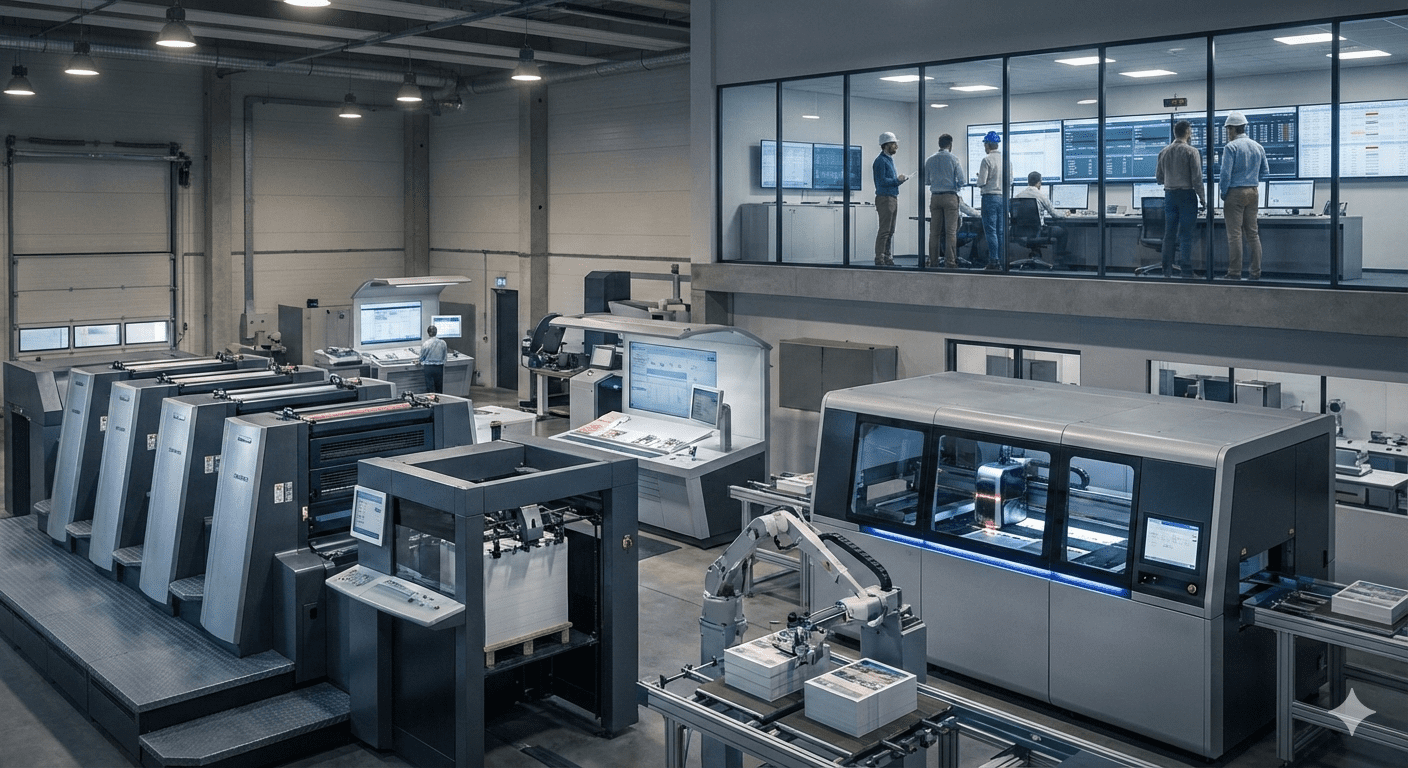
The printing process involves several stages, from pre-press to post-press. With the advent of digital printing, the process has become more streamlined, allowing for faster turnaround times and increased efficiency. Digital front-ends and print management software have also improved the printing process, enabling better color management and quality control. Moreover, the use of cloud computing and Internet of Things (IoT) has enhanced the industry's capabilities. Companies like Xerox and Epson are also exploring the potential of artificial intelligence in printing.
Key Facts & Numbers
The industry employs millions of people worldwide, with the majority working in the commercial printing sector. The growth of the industry is driven by the increasing demand for printed materials, such as packaging and labels.
Key People & Organizations
Key players in the printing industry include HP Inc, Canon Inc, and Epson. These companies are driving innovation in the industry, with a focus on developing sustainable and eco-friendly printing solutions. Other notable companies, such as Xerox and Ricoh Company, are also making significant contributions to the industry. Additionally, research institutions like Massachusetts Institute of Technology (MIT) and Stanford University are exploring new printing technologies, such as 4D printing.
Cultural Impact & Influence
The printing industry has a significant impact on culture and society, with printed materials playing a crucial role in communication and education. The industry has also been influenced by cultural and social trends, such as the rise of social media and the growing demand for sustainable living. Moreover, the industry has been shaped by the work of artists like Andy Warhol, who used printing as a medium for their art.
Current State & Latest Developments
The current state of the printing industry is characterized by rapid technological advancements and changing consumer demands. The industry is shifting towards more sustainable and eco-friendly practices, with a focus on reducing waste and minimizing environmental impact. The growth of digital printing and the increasing adoption of inkjet printing and toner-based printing are also driving the industry forward. Furthermore, the industry is being shaped by the COVID-19 pandemic, which has accelerated the adoption of digital technologies and highlighted the need for sustainable and resilient supply chains.
Controversies & Debates
The printing industry is not without its controversies and debates. The industry has been criticized for its environmental impact, with the production of printed materials contributing to deforestation and greenhouse gas emissions. However, companies like HP Inc and Canon Inc are working to address these issues through the development of sustainable and secure printing solutions.
Future Outlook & Predictions
The future of the printing industry looks promising, with advancements in technology and changing consumer demands driving growth and innovation. The industry is expected to continue its shift towards more sustainable and eco-friendly practices, with a focus on reducing waste and minimizing environmental impact.
Practical Applications
The printing industry has a wide range of practical applications, from commercial printing to packaging and labels. The industry also plays a crucial role in the production of educational materials and marketing materials. Moreover, the industry is being used in innovative ways, such as the production of 3D printed prosthetics and customized jewelry.
Key Facts
- Year
- 2020
- Origin
- Global
- Category
- industry-news
- Type
- concept